

Solidarity
How can we create compassion and solidarity?
How do you care for others?
Who decides what support is needed?
Imagine asking for support and being treated as a human being in control of your life, not a loser or beggar. Imagine supporting that person without assuming you have a solution. Imagine a world where we enjoy caring for each other and celebrate our compassion for others.
“Changes and progress very rarely are gifts from above. They come out of struggles from below.” - Noam Chomsky
Challenge the Helpers
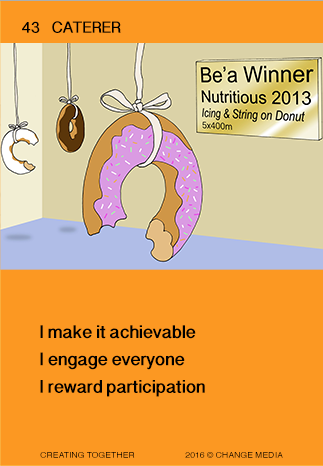
Caterer
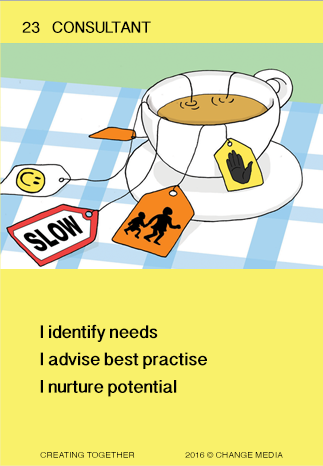
Consultant
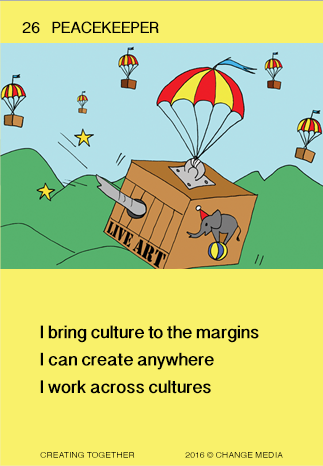
Peacekeeper
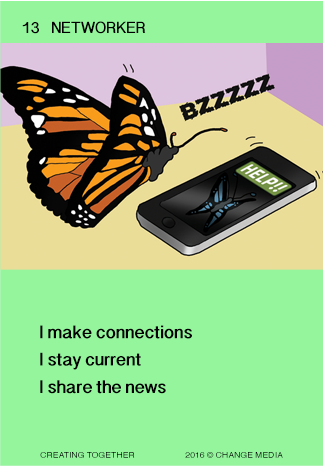
Networker
Rescuer
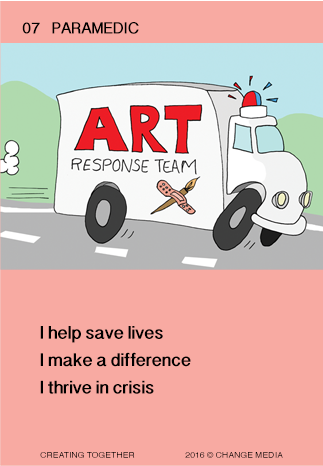
The Helpers attempt to help others, but patronize and subdue, and induce compliance, dependence and fear.
They believe they can ‘help’ as opposed to ‘support’, help coming from above, often as a patronizing 'helping hand', offering unsolicited care without posing difficult questions of appropriateness, mutuality or reciprocity, that 'support' needs to consider to be effective and compassionate.
If funds for community support were truly community-driven, would the community spend it on ‘help’ and hundreds of hours with consultants having nice cups of tea - or would they demand equitable, transparent and accountable actions? How do we ensure that our practice does not become part of an effort to subdue and silence dissent?
For those of us who are not silenced yet, we need to use our privilege well. And before we get scared again and bunker down into cozy echo chambers, let’s consider how we can really care for each other, with the unknown and the absent, to arrive at solidarity. We can join other people’s efforts, but let’s also use the enormous skills and passion already present in our sectors, to make work that links those struggles, that communicates and questions our values and actions, to play in the unknown world we want to co-create.
Questions
How do we link our work to self-determination, without succumbing to identity politics driven by fear and belonging within a culture of lack?
How can we determine practical solidarity, in our work and build trust, rather then fear-driven compliance?


Sed purus sem, scelerisque ac rhoncus eget, porttitor nec odio. Lorem ipsum dolor sit amet.