

Liberation
How is your liberation bound up with mine, and mine with yours?
How do you respond to risk?
Liberation and reciprocity
Everyday is an opportunity for change. Seeking justice is challenging, let's not assume that it will be comfortable. Creating change is risky for all of us. Supporting each other to experience a life well lived is a reciprocal process. Self determined play is risky, and we will all have demands we need to agree on with respect and reciprocity - and they are not fixed. Ignorance is a choice, not an excuse, we need to train how to to speak up and find the clarity to stop oppressive situations, so we can reframe the rules non-violently.
“If you have come here to help me, you are wasting your time. But if you have come because your liberation is bound up with mine, then let us work together.” - Lilla Watson and Aboriginal activists group, Queensland, 1970s
“If I were to remain silent, I'd be guilty of complicity.” - Albert Einstein
Challenge the Fear-mongers
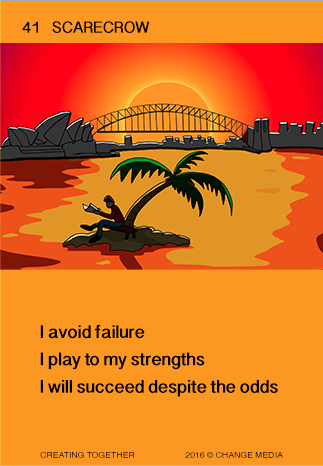
Scarecrow
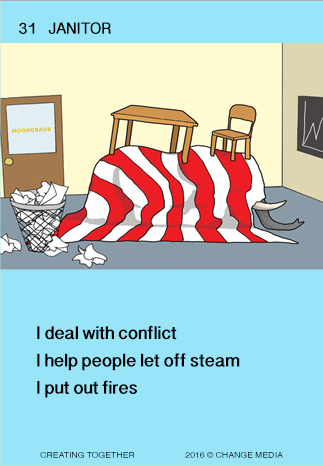
Janitor
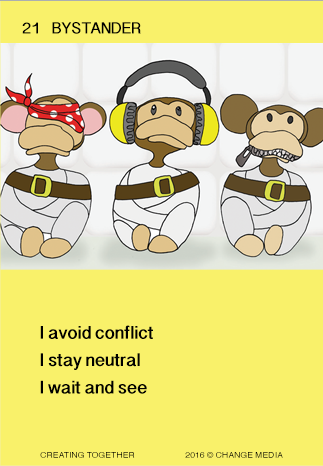
Bystander
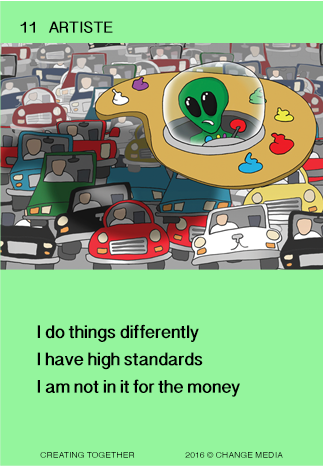
Artiste
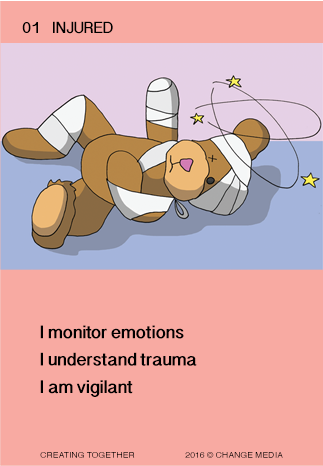
Injured
The Fear-mongers attempt to avoid conflict, but scare others, instilling distrust and normalizing hatred and fear.
They often speak from their hurt and fear of exclusion, and remind us that we are all replaceable in a competitive society - without losers there can be no winners. They have an uncanny ability to look the other way. Their denial is the proverbial frog’s ability to be boiled to death by increments. They find the best excuses and tactics to scare and co-opt others into their fear.
On a global level, systematic violence can continue when groups of people remain silent or deny it is happening. As Ghassan Hage points out, even though Australia has not signed a treaty to acknowledge our violent history, mainstream fears that others might invade Australia reflects a sentiment that an invasion did occur.
"We are willing to fear the threat of strangers because we know this land has already been stolen. This is the sensitivity of thieves.” - Ghassan Hage
Questions
What is a life well lived? Who but you can answer this question for yourself?
How do we speak to power struggles in our work, when we are muzzled by risk adversity?
How can you reframe your mistakes into ‘glorious failures’? Notice what you value - what would you do differently?


Sed purus sem, scelerisque ac rhoncus eget, porttitor nec odio. Lorem ipsum dolor sit amet.